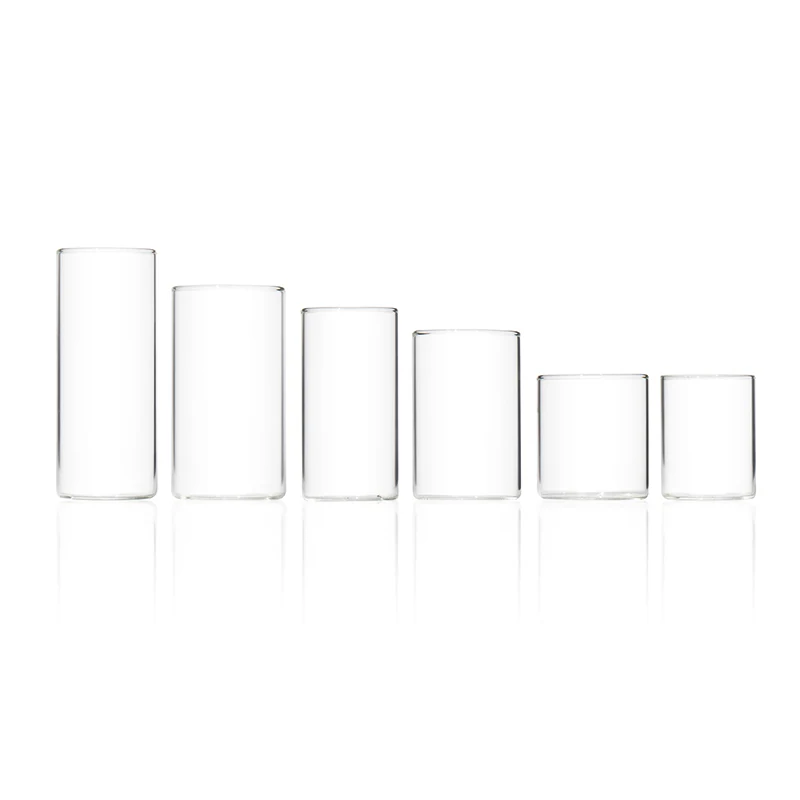
Start with a packaging brief
Write down the intended candle format, target fill, available display space and the look of the collection. Add the quantity by design, lid requirement, individual packaging and destination. These are selection inputs; they should be agreed before a photograph becomes a purchasing decision.
Keep essential requirements separate from visual preferences. A fixed carton size, for example, constrains the vessel differently from a preferred shade of blue. Identify which decisions can change and which cannot.
Compare Candle Jar Styles and Requirements
Photographs are useful for shortlisting shapes and finishes. They do not establish a common capacity or shared closure fit, even when several jars are shown together. Carry the photograph reference into the next discussion so the exact candidate can be identified.
| Decision | What to compare | What to request |
|---|---|---|
| Shape | Body width, height and straight-sided artwork area | A dimensioned drawing for each candidate |
| Color and surface | Empty and filled appearance under the same light | A physical color and finish sample |
| Closure | Appearance, seating and assembled height | A matched jar-and-lid sample |
| Decoration | Position, legibility and surface compatibility | Artwork area and a decorated sample |
| Supply | Quantity by design and included components | An itemized quotation and proposed schedule |
Keep volume, wax weight and dimensions separate
A jar description such as “8 oz” needs context. Ask whether it refers to a volume, an intended fill weight or a product name. Request the external dimensions and the proposed fill line as separate fields.
Use the assembled jar and lid when checking shelf height or box dimensions. Use the actual formulation and agreed fill line when establishing the fill weight; a water-volume figure is not a universal wax-weight conversion.
Review the brand on the chosen surface
Transparent color makes the contents part of the appearance. An opaque surface gives the label a more consistent background. Frosted-looking finishes soften the view through the wall. Compare all three in the context of your own artwork rather than treating a finish name as a complete design brief.
Check the front, side and top of the sample. Look at label edges, rim clearance, lid proportions and how the range looks together. Keep a physical approved sample alongside the artwork version and color reference.
Confirm the intended candle application
Ask the supplier to identify the selected vessel and its intended application, with relevant material, finish and test information. The finished candle also involves the wax, wick, fragrance, fill and decoration. Review these as one system before treating an attractive container as a production choice.
Keep unanswered questions visible in the shortlist. A simple comparison sheet should distinguish a visual preference from a checked specification and from a result that still needs a sample or test.
Take a concise shortlist into sampling
For each candidate, record the photo or model reference, the reason it fits your collection and the information still needed. Ask for the vessel, lid, decoration, sample cost, packing and delivery terms to be itemized on the same basis.
Your next step is a comparison of defined samples, followed by a documented choice. Keep the approved model and configuration attached to the quotation so an attractive sample and the proposed order describe the same package.