First, name the complete object
An empty bottle, an empty bottle-and-reed set and a filled home-fragrance product are different requests. Start by writing what should be supplied and what you plan to source separately.
This guide concerns empty glass packaging for home reed diffusers. Car-mounted containers, electric devices and their reservoir bottles require separate product and application checks.
- Empty bottle
- Just the vessel; identify any closing parts separately.
- Bottle with components
- List the cap, stopper, collar, reeds and packaging individually.
- Filled fragrance product
- Includes a liquid product; outside this empty-packaging selection.
Write one clear sentence
“I need empty glass bottles, with the closure and reeds listed separately for review.” Adjust the parts to match your project.
Capacity vs. Bottle Dimensions
A capacity name does not describe the complete dimensions of a bottle. Keep these fields distinct when you compare a sample or quotation:
- Nominal capacity
- The supplier’s capacity designation for the model.
- Measured capacity
- Ask which measurement and fill level a stated volume refers to, including brimful capacity when supplied.
- Target fill
- The amount you intend to put in the bottle and the proposed fill level.
- External space
- Record width and depth or diameter, bottle height and overall height with the proposed reeds.
Use mL or US fl oz for liquid volume, and mm or inches for dimensions. Fluid ounces measure volume; weight ounces do not. Keep the original unit with every value. Small, mini, large and giant are useful starting descriptions, but measured dimensions are needed to make them precise. A tall silhouette may still have a relatively small footprint.
Keep your measurements together
No dimensions recorded yet.
Bottle Color & Surface Finish
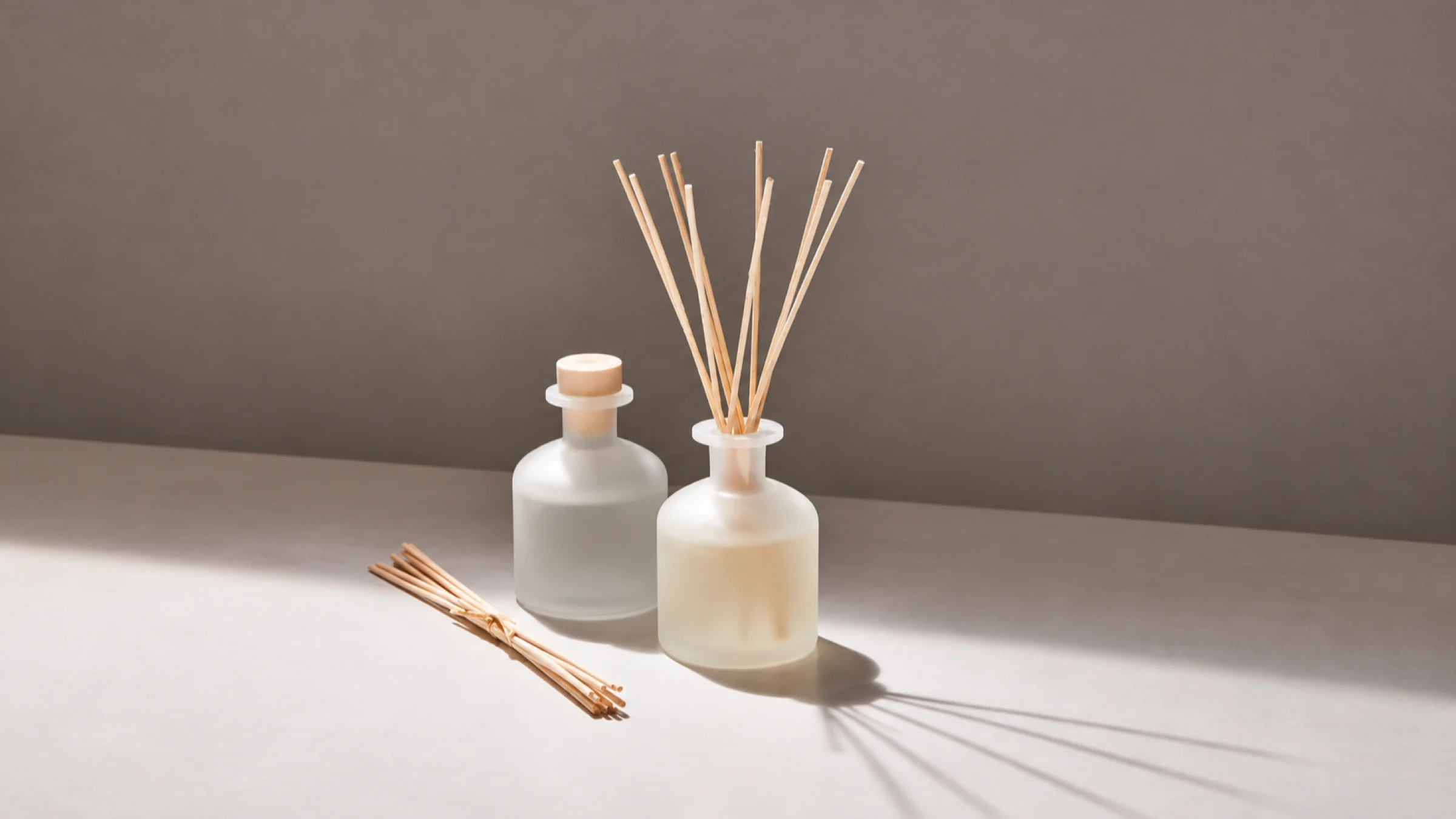
Ask for an empty-bottle view. This helps separate the glass appearance from the liquid, cap and lighting. Write bottle color and closure color as different fields.
Record whether you want a clear, translucent or opaque appearance, then describe the surface separately. A color name alone does not specify how it is made. For gold or silver effects, identify exactly where the effect should appear.
For a shaped or textured bottle, mark the intended label or decoration area. A physical sample and a drawing can help make the reference specific.
Plan the decoration areaBottle, Closure & Reed Compatibility
Similar-looking necks and caps are not enough to establish a pairing. Request the bottle model, neck information and separate part references.
- What is included?
- List the bottle, cap, stopper, collar, reeds and outer packaging individually.
- What has been paired?
- Ask which exact combination has been checked and what remains to be reviewed.
- What is your application?
- Provide the intended liquid, packing and use context so the review conditions can be agreed.
What to Check on a Sample
A sample review works best when it has a written checklist. Separate appearance approval from dimensions, fit and application checks. Record who confirms each item and the conditions of that confirmation.
Compare appearance
Check the agreed color reference, transparency, surface and artwork placement.
Confirm dimensions and parts
Match the sample to the drawing and the component list. Note any unconfirmed values.
Agree application checks
Define the checks needed for your liquid, parts and packing with the responsible supplier or qualified reviewer.
Record the approved configuration
Keep model, variant, parts and approval date together before discussing production.
This is a specification workflow, not a test method or a performance guarantee. It does not establish diffusion duration, leakage resistance or suitability for an untested liquid.
Your bottle selection checklist
Take the answers below into your sample or quotation request. Keep undecided fields visible rather than filling them with guesses.
Mark the information you have prepared. This is not product approval.
Still to prepare
This tracks information readiness, not product approval.