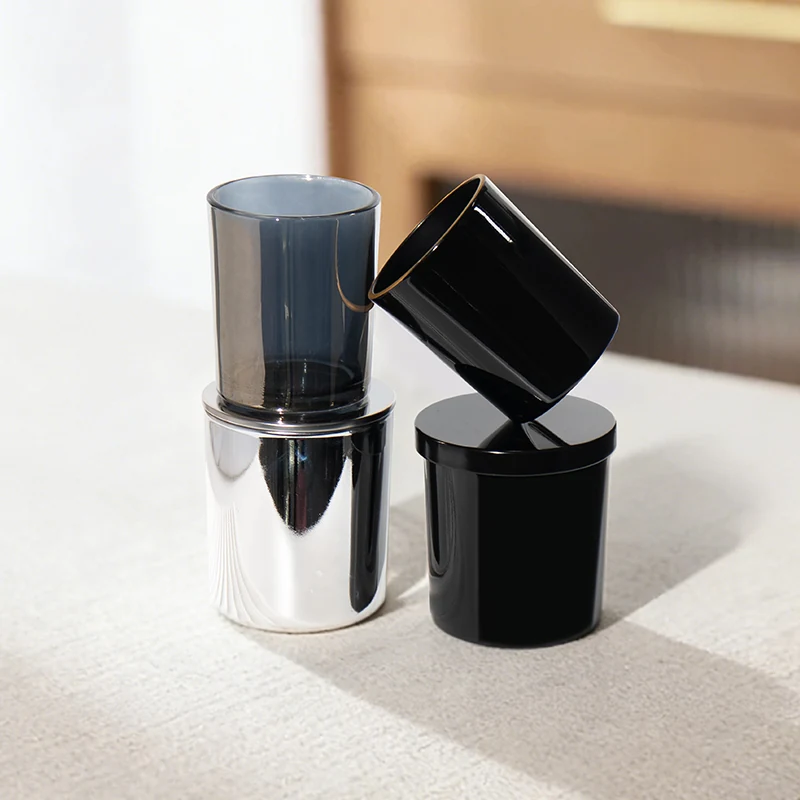
Start with a rim accent, reflective body or contrasting interior. Open the product family with your preferred look, then confirm the model, finish and size.
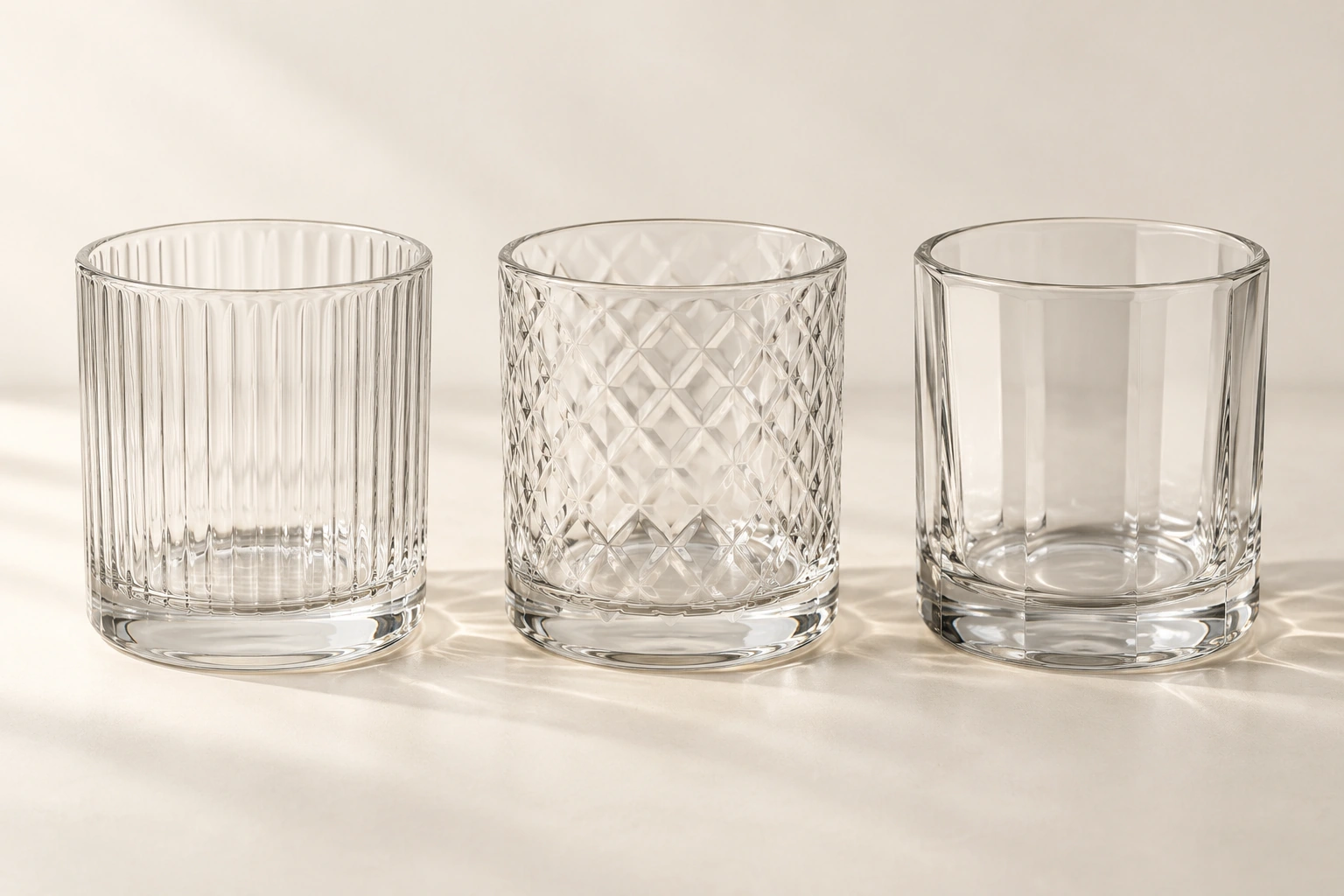
Use the texture concepts to define the look you want. Compare the pattern, overall shape and space available for your label.
Ribbed glass
Specify the rib direction, spacing and depth. Compare how the lines catch the light and whether a smooth panel is needed for your label.
Embossed glass
Share a pattern reference and mark its coverage. Review the raised detail, overall proportions and any areas that should remain smooth.
Cut or faceted appearance
Compare the width and shape of the flat faces. Confirm the glass material and forming method with the proposed model; a faceted look alone does not establish crystal glass.
Texture concepts: ribbed, embossed and faceted appearances. Model availability requires confirmation.
Specify the Finish You Mean
Describe the effect, its position on the jar and the look under different lighting. Review the actual treatment with the sample.
Iridescent or metallic look
For iridescence, show the color shift from more than one angle. For a metallic look, specify the tone and reflectivity. Ask for the proposed treatment; a shiny finish does not establish electroplating.
Etched or hand-painted detail
Provide the pattern, scale and coverage. Review line definition, opacity and repeatability on a sample, and confirm the proposed process for the selected glass.
Material and coverage
Clarify descriptions such as crystal or mercury glass against the material specification. Mark exterior, rim and interior areas separately, and confirm the intended candle application.
For sample approval, record the finish reference, treatment, coverage and any areas to leave undecorated.
Fit the Detail to the Complete Jar
Check the jar dimensions, closure and decoration area as one combination. Share the following details when requesting a sample.
Size, lid and decoration details for your selected model
Selection detail
What to specify and confirm
Model & jar volume
Identify the jar reference and target vessel volume in ml or fl oz. Confirm nominal and brimful capacity for the proposed model.
Body & opening · mm
Check outside diameter, height and opening dimensions on a drawing. Include the usable label area and any texture clearance.
Lid & included parts
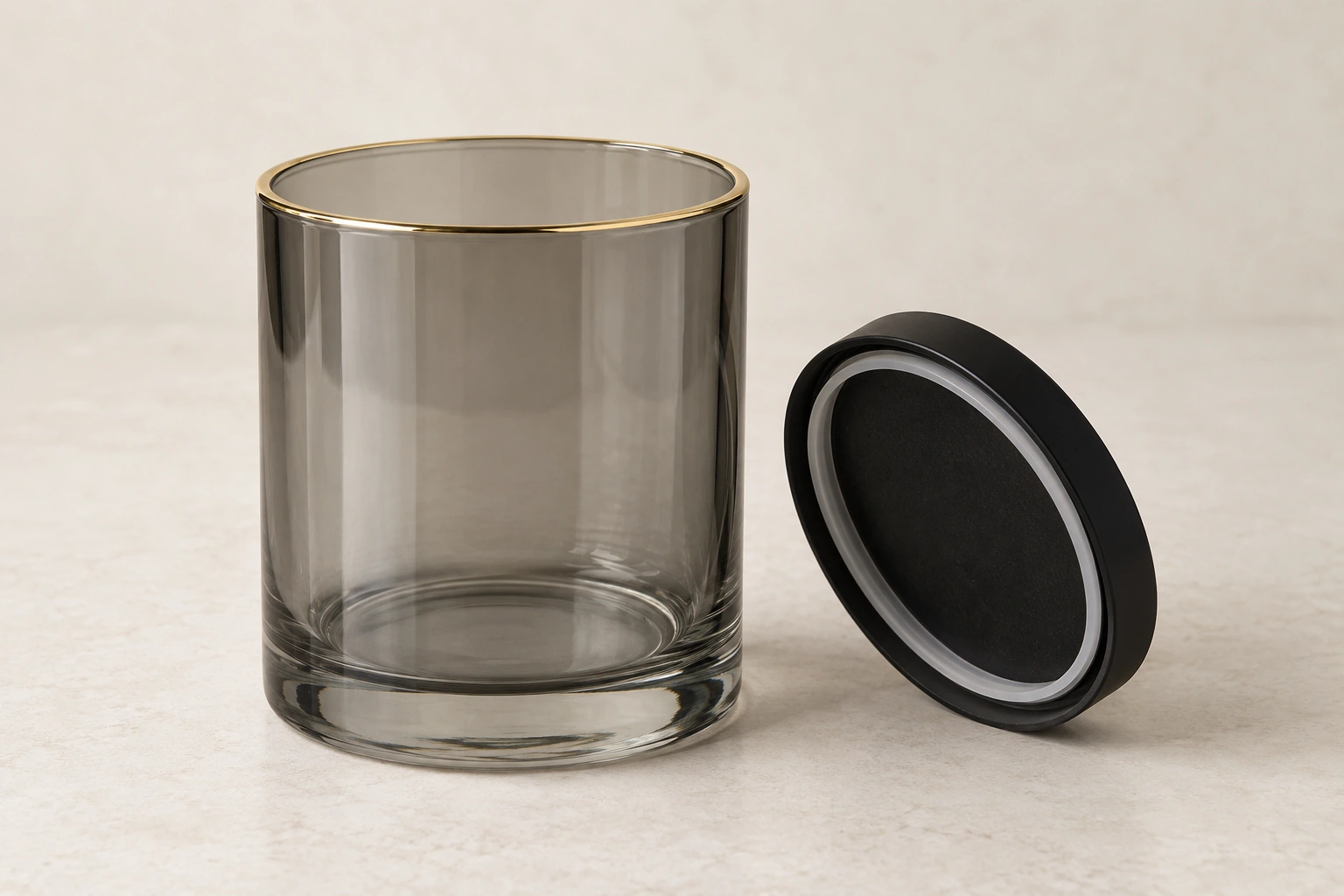
Specify the lid reference, material, finish and liner or sealing ring. Confirm the fit and whether the quotation includes each part.
Decoration method & area
Mark exterior, rim or interior coverage and any undecorated areas. Confirm the treatment and its position relative to the lid and fill level.
Intended candle application
Request application information for the selected vessel and finish. Evaluate the complete candle with your intended wax, wick, fragrance and fill level.
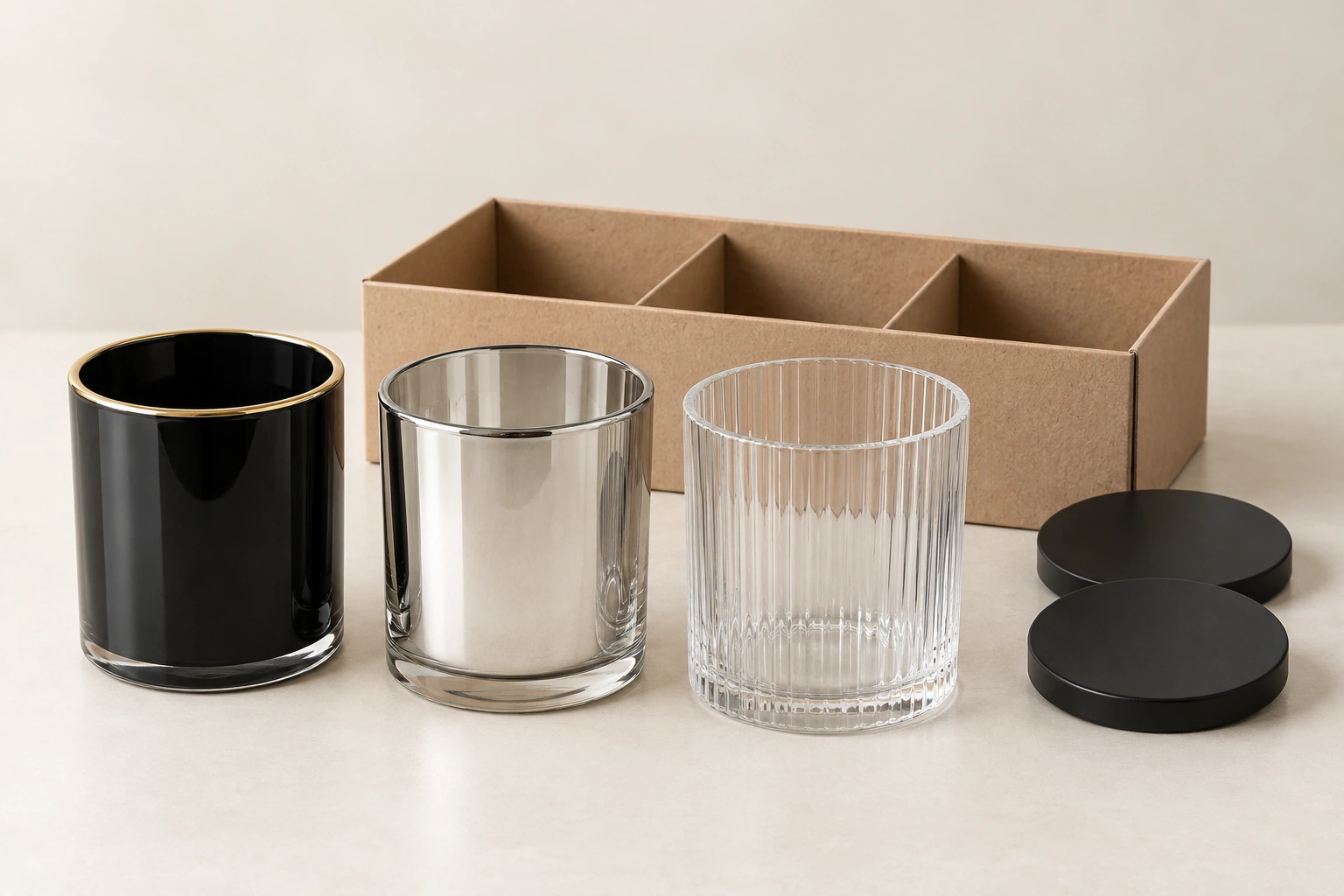
Jar-and-lid concept. Measurements, finish and closure fit require confirmation on the selected sample.
Jar volume & wax fill
Volume describes the space inside the jar. Wax weight depends on your formulation and fill level. State the unit you need and review the actual sample.
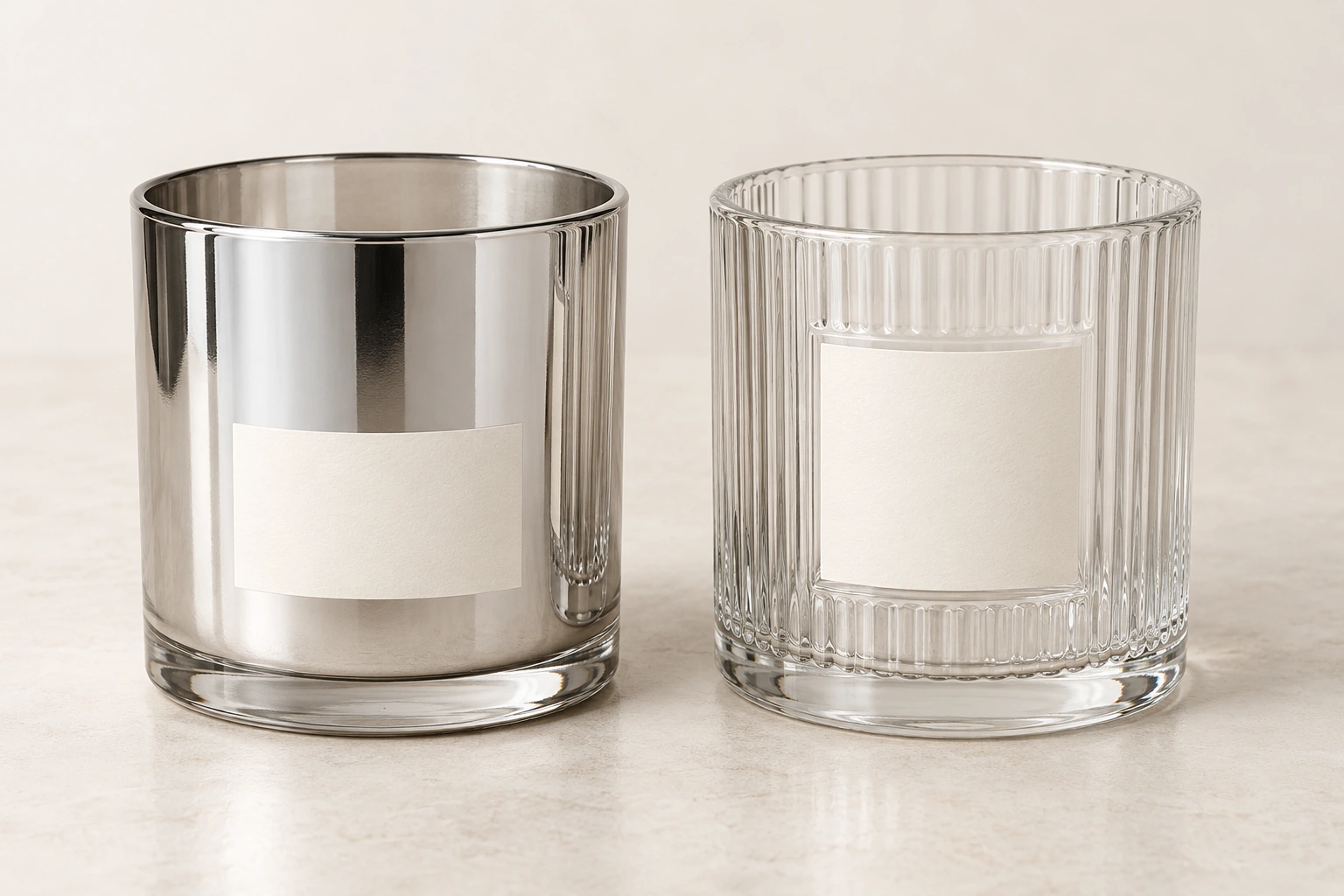
Balance the decorative detail with a clear area for your label or logo. Compare placement on the selected jar before approving the artwork.
Reflective surfaces
A paper label creates a defined reading area. Compare the contrast, label size and surrounding reflections under the lighting your customers will see.
Textured surfaces
Locate a smooth panel or suitable flat face. Keep label edges clear of deep ribs and raised patterns, then review curvature, edge lift and adhesion.
Artwork and placement
Send the label dimensions or print file and mark the desired position. Leave room around the rim, base and decorative detail; review direct printing as a separate process request.
Label-placement concepts. Available flat areas, print quality and adhesion are reviewed on the actual sample.
Start with a photographed appearance or a reference for a new effect. Define each version clearly so the sample and quotation cover the same combination.
Start from an existing appearance
Name the photograph or jar reference, target size, finish and lid. List the quantity for each version and any changes to the shown appearance.
Describe a new decorative request
Add the effect reference, marked coverage, artwork and desired color or reflectivity. Review a proposed jar and decoration sample before approving the final combination.
Confirm sampling and delivery
Include the delivery country, target date and packing needs. Request the minimum quantity per version, sample or setup fees, sample timing, carton quantities and production lead time.
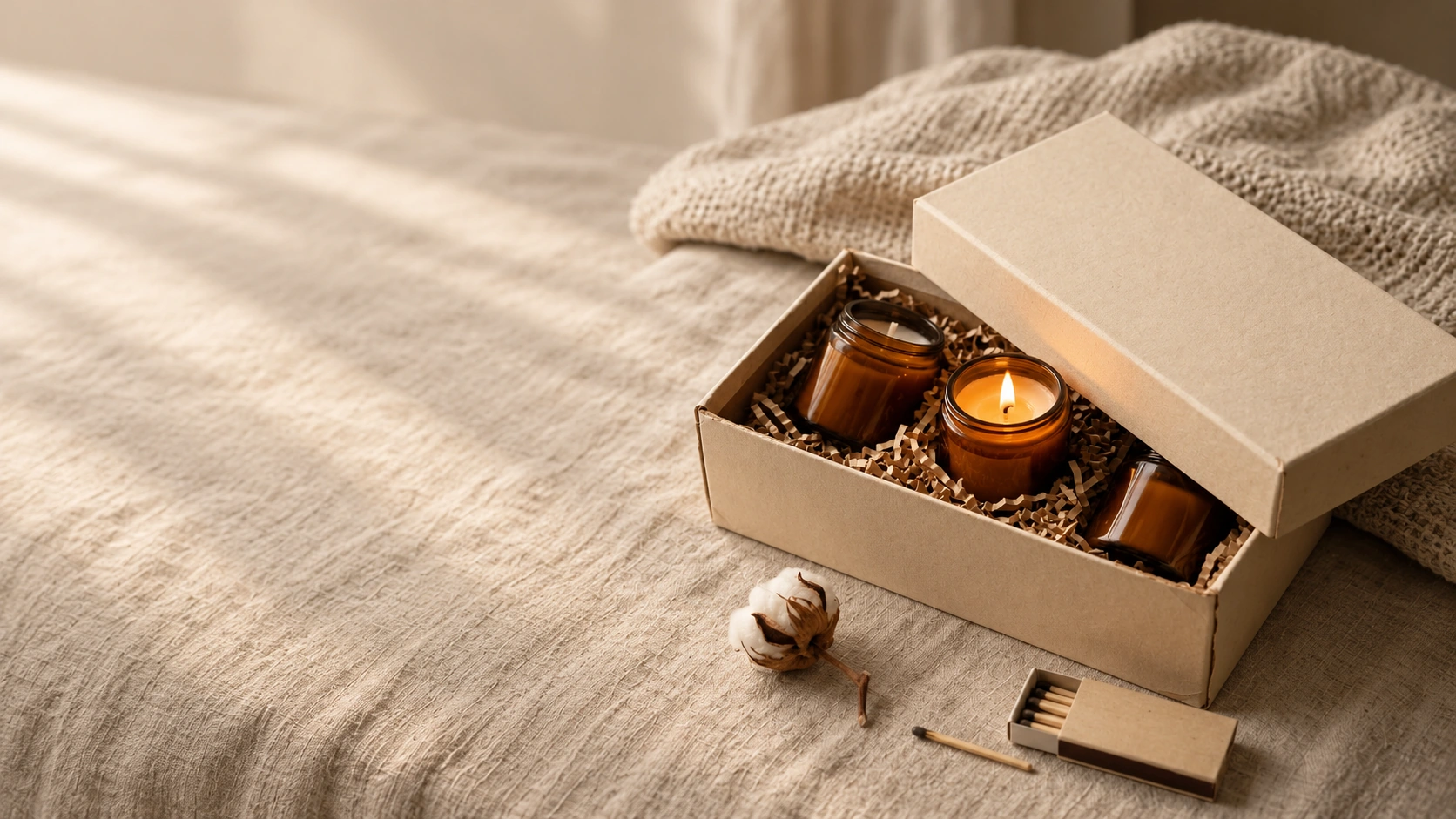
Sample and packing concept. Available models, included parts and carton layout are confirmed for your order.
Questions Before You Choose
Does a metallic appearance mean the jar is electroplated?
No. Reflection alone does not identify the treatment. Confirm the process, material and coverage for the chosen sample.
Are ribbed or embossed jars available?
The texture images illustrate directions to discuss. Send your preferred pattern, dimensions and quantity so a suitable model can be assessed. Availability and any tooling requirements need confirmation before ordering.
Can I specify the decoration area?
Mark the exterior, rim or other area on a reference. The treatment and suitability for the intended candle application need review.
Where can my label or logo be placed?
Start with the usable flat area and compare visibility against the decoration. Confirm dimensions, adhesion or print application on the selected sample.
How do existing and new finish requests differ?
An existing reference starts from the photographed look. A new request also needs the effect, coverage and artwork defined before sampling and order terms can be assessed.